
Blog
Sliding Table Saw Buying Guide for Cabinet and Furniture Shops

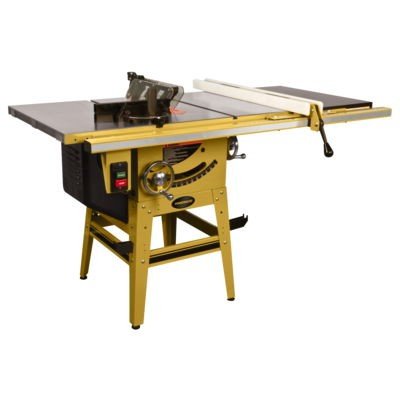
A sliding table saw should be selected around the largest panel, the normal cut sequence and the level of repeatability required by the shop.
Sliding table saws combine a supported moving carriage with a main blade, crosscut system and often a scoring blade. They can serve mixed cabinet, millwork and solid-wood production, but carriage size alone does not define the right configuration.
Begin with the panel and the cut list
Record maximum sheet dimensions, thickness, surface material and the smallest finished components. Review whether the operator normally squares full sheets, cuts finished panels, processes solid wood or switches frequently between jobs. A representative cut list reveals more than a general statement about sheet size.
Match carriage travel to the work
The carriage must support the required crosscut while leaving safe room for loading and operator movement. Consider outrigger-table support, crosscut-fence capacity, stops and digital readouts. Include the full operating envelope—not only the machine footprint—when planning the floor.
Confirm scoring and blade requirements
Laminated and finished panels may require a scoring unit to control chipping on the lower face. Confirm scoring adjustment, blade diameter range, arbor details and available tooling. Blade selection, alignment and material support all influence cut quality.
Evaluate repeatability and setup
Manual stops can be effective for flexible work, while digital or powered positioning can reduce setup variation in repeated production. Compare how the operator sets angles, returns to previous dimensions and verifies the fence before cutting valuable material.
Plan extraction and handling
Review upper-guard and lower-cabinet dust connections using the manufacturer’s airflow requirements. Allow space for sheet carts, offcut handling and staged parts. A saw that cuts quickly will not improve output if material cannot be moved safely through the cell.
Buyer checklist
- Maximum sheet and crosscut length
- Rip and crosscut fence capacity
- Scoring-unit configuration
- Blade and arbor specifications
- Digital positioning requirements
- Dust extraction, power and floor space
Compare machines using the same panel, blade specification and cut sequence. The best choice is the configuration that produces the required parts repeatedly while fitting the shop’s people, space and downstream workflow.
Important: Confirm capacities, guarding, dust-control requirements, utilities, installation instructions and safe operating procedures in the current manufacturer documentation with qualified personnel before purchase or use.