
Blog
Wood Moulder Buying Guide: Profiles, Feed Speed and Tooling

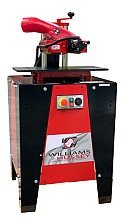
A production moulder should be configured around the finished profile, incoming blank, tooling plan and realistic changeover schedule.
Moulders can consolidate sizing and profiling into one controlled pass, but spindle count and maximum feed speed are only the starting points. Stable output depends on material preparation, hold-down, tooling, extraction and operator setup.
Start with the finished component
Collect profile drawings, tolerances, minimum and maximum lengths, species, moisture range and expected weekly volume. Identify which faces require machining and whether the part needs straightening, splitting, grooving or multiple profiles.
Build the spindle sequence
Bottom, right, left and top spindles establish the section; additional top, bottom or universal spindles can support more complex work. The correct sequence depends on where the stock is referenced and when each feature is cut. Review actual tool diameters and projection, not just spindle position.
Evaluate feed and hold-down
Feed speed must be balanced against cutter marks, material stability and downstream capacity. Short, narrow or irregular blanks may require special feeding or another process. Confirm minimum part dimensions, pressure elements and safe handling procedures with the manufacturer.
Plan tooling before purchase
Tooling cost, bore or spindle interface, hydro-locking options, knife systems and profile changeover can materially affect ownership cost. Include tool measurement, storage, balancing, sharpening and replacement lead time in the plan.
Dust extraction is part of production
Each spindle hood has an airflow requirement. Duct size, velocity and simultaneous demand must be evaluated as a system. Inadequate extraction can reduce finish consistency and increase cleanup and maintenance.
Buying checklist
- Profile drawings and tolerances
- Incoming and finished dimensions
- Required spindle sequence
- Tooling interface and changeover plan
- Feed speed and downstream capacity
- Extraction, power, air and service space
Compare proposed machines using the same profiles and material assumptions. A documented tooling and changeover plan is as important as the machine specification.
Important: Confirm capacities, guarding, dust-control requirements, utilities, installation instructions and safe operating procedures in the current manufacturer documentation with qualified personnel before purchase or use.