
Blog
Industrial Machine Installation Checklist: Prepare Before the Truck Arrives

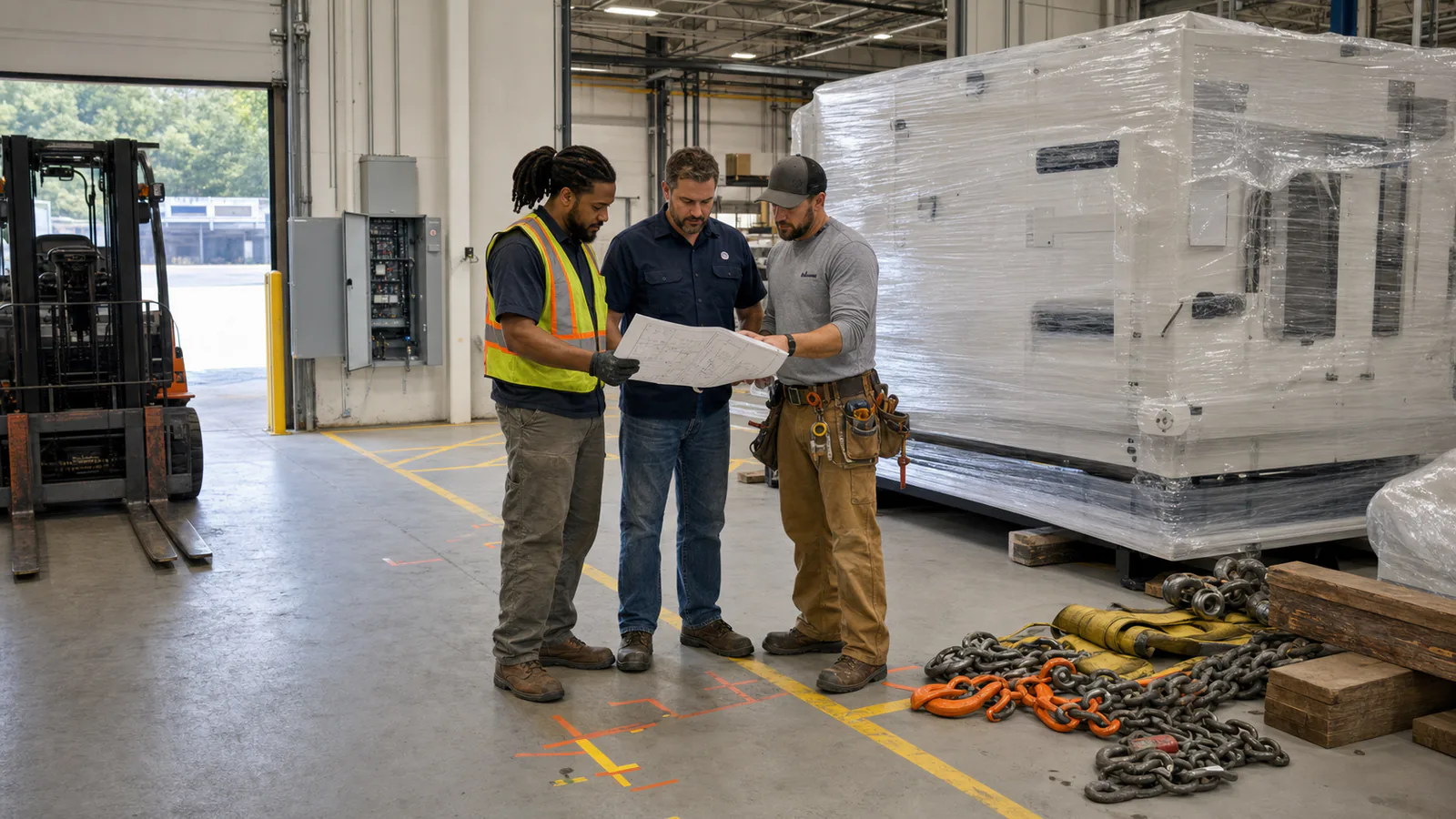
Prepare for industrial machinery delivery with this checklist for drawings, access, rigging, foundations, power, utilities, safety and training.
The delivery date is not the day to discover that the machine will not clear the door.
Industrial equipment installation brings together purchasing, facilities, maintenance, production, safety, electricians, riggers and the carrier. When those teams work from different assumptions, a machine can sit in a crate while the shop waits for power, anchors, tooling or a second forklift.
The best installation begins before the order is released. Use this checklist to assign responsibilities and uncover gaps.
1. Obtain the current installation documents
Request the current documents for the exact machine configuration:
- Shipping dimensions and weights
- Crate or pallet count
- Center of gravity and approved lifting points
- Operating footprint
- Foundation or floor requirements
- Anchoring pattern
- Electrical requirements
- Compressed-air, hydraulic, coolant or water requirements
- Environmental limits
- Required service clearance
- Installation and operator manuals
Confirm revision dates. A generic brochure may not include optional tables, control cabinets, conveyors, guards or accessories that affect the layout.
Create one controlled installation folder. Give the same drawings to the rigger, electrician, facilities team and internal project owner.
2. Walk the entire delivery path
Start where the freight vehicle enters the property and finish at the machine’s final position.
Measure:
- Gate width and turning radius
- Overhead lines and exterior obstructions
- Dock height and capacity
- Ground conditions for cranes or forklifts
- Door width and height
- Hallway and aisle clearances
- Corners and turning space
- Ceiling height
- Sprinkler, duct, light and crane clearance
- Floor transitions and ramps
Use shipping dimensions—not final machine dimensions. Crating, skids and lifting equipment can create a larger envelope.
Mark the intended path on a floor plan. Remove stored material and schedule production changes before delivery day.
3. Select the unloading and rigging plan
Do not assume the freight driver will unload or position the equipment.
Assign who will provide:
- Forklift of verified capacity
- Crane or qualified rigger
- Spreader bars, slings and shackles
- Machinery skates or rollers
- Fork extensions where permitted
- Blocking and cribbing
- Trained operators and signal persons
Capacity must account for load center, attachment effects and the actual configuration of the lifting equipment. Machine weight alone is not a lift plan.
Share the manufacturer’s approved lift points and center-of-gravity information with the rigging provider. Never lift from a convenient-looking surface unless it is identified for that purpose.
4. Verify the floor, foundation and anchors
Confirm floor thickness, condition, levelness and load-bearing capacity. Heavy, dynamic or precision equipment may require a designed foundation or isolation provisions.
Check:
- Static machine weight
- Concentrated loads at feet or anchor points
- Dynamic forces
- Vibration sensitivity
- Anchor type and embedment
- Grout requirements
- Leveling method
- Proximity to joints, pits or underground utilities
Use qualified engineering support where the manufacturer or site conditions require it.
OSHA states that machinery designed for a fixed location must be securely anchored to prevent walking or moving. Follow the current installation instructions and applicable requirements.
5. Confirm electrical service
Read the machine nameplate and installation documents. Record:
- Voltage
- Phase
- Frequency
- Full-load current
- Recommended overcurrent protection
- Disconnect requirements
- Control voltage
- Grounding requirements
- Transformer or phase-conversion needs
Have a qualified electrician verify the actual building supply, panel capacity, conductor routing and code requirements. Similar voltage labels do not guarantee compatibility.
Locate the disconnect so it is accessible for operation and energy isolation. Do not energize the machine until installation checks and manufacturer procedures are complete.
6. Prepare every supporting utility
Depending on the machine, confirm:
- Compressed-air pressure, flow and quality
- Hydraulic-fluid specification
- Coolant type and initial quantity
- Lubricant specifications
- Process water and drainage
- Dust, chip, mist or fume collection
- Gas supply
- Network drop and IP requirements
- Temperature, humidity and cleanliness
Air pressure without sufficient flow can produce poor operation. A network cable without approved security access can delay control setup. Define both the connection and the performance requirement.
7. Plan safeguarding and energy control
Installation is not complete when the machine runs. It is complete when the intended process can be performed safely under the employer’s procedures.
Review:
- Point-of-operation guarding
- Perimeter or rear-area protection
- Interlocks and safety devices
- Emergency-stop access
- Operator control position
- Part loading and unloading
- Flying chips, sparks, dust or coolant
- Noise exposure
- Required personal protective equipment
- Lockout/tagout points
- Stored hydraulic, pneumatic, mechanical or thermal energy
OSHA’s machine-guarding guidance explains that safeguards protect workers from points of operation, rotating parts, flying chips and sparks. OSHA’s lockout/tagout standard addresses hazardous energy during covered servicing and maintenance and requires employer procedures and training.
Use qualified safety professionals and the current manufacturer instructions. A generic checklist cannot approve a machine-specific safeguarding system.
8. Confirm tooling and production supplies
A machine can be installed perfectly and still be unable to make the first part.
Before delivery, confirm:
- Initial tooling package
- Blades, punches, dies, cutters or abrasives
- Workholding and clamps
- Gauges, stops and supports
- Measuring equipment
- Coolant and lubricants
- Spare consumables
- Raw material for test cuts or bends
- Drawings and approved test parts
Label and store tooling before training begins. Operators should not have to search through shipping boxes during commissioning.
9. Define commissioning responsibility
Write down who performs each step:
- Uncrating and damage inspection
- Positioning
- Leveling and anchoring
- Electrical and utility connection
- Fluid fill
- Guard and accessory installation
- Initial power-up
- Parameter or control setup
- Test operation
- Accuracy verification
- Acceptance signoff
Clarify whether manufacturer or dealer commissioning is included, optional or unavailable. Do not let an unqualified person power up equipment simply because the schedule is under pressure.
10. Schedule operator and maintenance training
Training should cover more than basic motion.
Operator topics:
- Intended applications and capacity limits
- Controls and operating modes
- Setup and tooling
- Guarding and safe material handling
- Emergency response
- Quality checks
- Daily inspection and cleaning
Maintenance topics:
- Preventive-maintenance schedule
- Lubrication points
- Fluid and filter service
- Wear inspection
- Troubleshooting process
- Parts identification
- Energy-control procedures
- Service documentation
Record attendance and retain the manuals where employees can access them.
11. Inspect and document the delivery
Before signing the delivery receipt, inspect the crate, skid and visible machine areas. Note visible damage or shortages on the carrier document and take photographs.
After uncrating, preserve the packaging until the equipment has been inspected. Report concealed damage promptly according to the GT Machinery Solutions Shipping Policy and carrier requirements.
Installation readiness checklist
Documents
- Exact model and options confirmed
- Current installation manual received
- Shipping weights and dimensions received
- Foundation and anchoring plan approved
- Electrical and utility data approved
Site
- Delivery path measured
- Operating footprint marked
- Service and material clearances confirmed
- Floor or foundation ready
- Rigging provider and equipment scheduled
Utilities
- Electrical supply verified by qualified personnel
- Disconnect and protection installed
- Air, water, extraction or network ready
- Initial fluids and consumables available
Operations
- Tooling and test material ready
- Safeguarding review completed
- Energy-control procedure prepared
- Commissioning responsibility assigned
- Operator and maintenance training scheduled
- Acceptance criteria written
Frequently asked questions
Will the carrier position the machine inside our building?
Not unless that service is specifically arranged in writing. Standard freight delivery and rigging are different services.
Who should connect industrial machinery?
Use qualified personnel and follow manufacturer instructions, applicable codes and site procedures. Electrical and specialized utility work should be completed by appropriately qualified professionals.
Can we power the machine before it is anchored?
Follow the current installation manual and commissioning instructions. Many machines require proper positioning, leveling or anchoring before operation.
What should we use for an acceptance test?
Use documented checks tied to the ordered configuration and intended application: functions, safety devices, representative parts, dimensions, repeatability and included accessories.
Prepare the site while the order is moving
Send GT Machinery Solutions your delivery ZIP code, facility constraints and receiving contact early. A coordinated delivery and installation plan protects the schedule and the equipment.
CTA: Discuss Delivery and Site Requirements
Related reading
- Industrial Equipment Delivery and Receiving Checklist
- Shipping Policy
- Track Your Order
- How to Choose Industrial Metalworking Machinery
- Contact Us
Sources
Important: Verify capacities, guarding, installation requirements and safe operating procedures with the machine manufacturer, current manuals and qualified personnel before purchase or use.